A construction roll-off request should identify the waste stream, approximate quantity, placement and requested timing. Confirm material and loading terms before crews use it.
Order for the phase, not just the project name
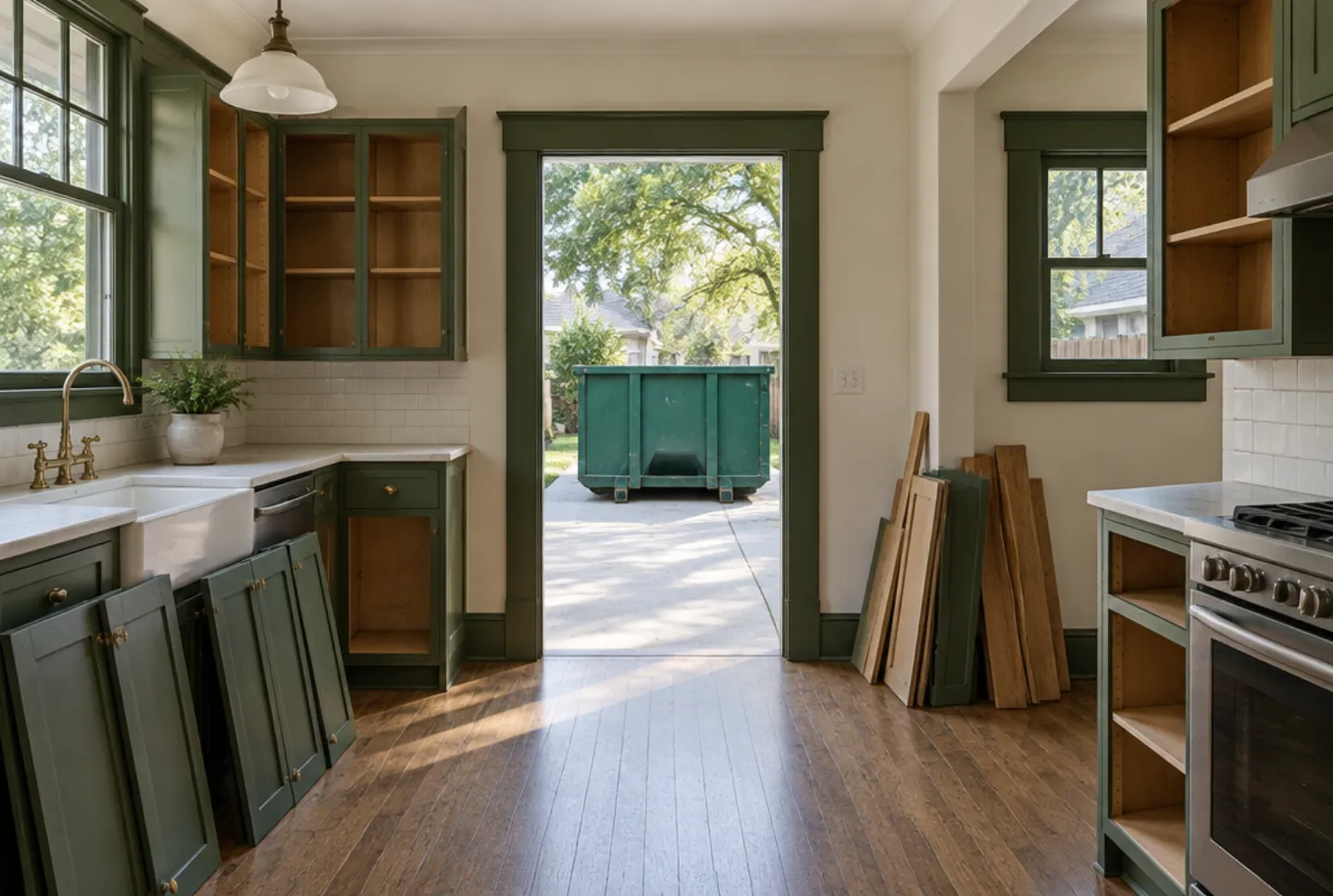
Construction dumpster rental in the Heights starts with the phase of work: demolition, framing and finishing create different debris. A construction roll-off dumpster should be quoted for the approved waste stream, site access and collection plan. Developers, contractors and commercial site contacts should identify who can authorize placement or schedule changes.
An addition can involve demolition, framing and finish work at different times. Tell the team which phase the container will serve. A bulky framing load and a dense masonry load should not be treated as interchangeable just because they came from the same address.
Give one person the placement decision
Choose a site contact who understands access, the intended footprint and which route must stay available. Share overhead obstructions, gates, slopes and nearby stored materials before the truck arrives. Do not put confidential gate codes in general project descriptions.
Set loading rules before the first wheelbarrow
Put the approved materials and fill limits where the crew can check them. Concrete and dirt need the designated setup. Keep restricted items out, and stop when an unexpected waste type appears. A larger box is not permission to exceed a material-specific weight limit.
Compare the complete service plan
Request terms for rental days, disposal allowance, delivery and collection. Ask about additional trips if the work produces more than one load. A preferred date is a request until the team confirms the schedule; plan around the confirmed arrangement.
Demolition: identify the material before loading
Describe what is coming down: interior fixtures, framing, masonry or another material. Volume alone does not set a safe load. Concrete and dirt need the designated 16-yard container; asphalt shingles are not accepted by this provider. Keep potentially hazardous or suspect materials out and obtain appropriate specialist advice before disturbing them.
Share the work phases and requested collection dates. Ask whether an exchange can be arranged, how it is priced and who on site should approve it. A quote request does not reserve a swap or approve demolition work.
Commercial business cleanouts
An office clearout, retail fixture replacement, tenant turnover or stockroom reset creates a different load from a house remodel. List shelving, desks, fixtures and packaging separately, then ask which items are accepted. Do not mix electronics, chemicals or other restricted waste into the general load.
Tell the team about business hours, loading docks, shared parking, pedestrian routes and any property-manager approval. Ask for the delivery and collection process to fit the operating plan. This site concerns temporary project containers; describe recurring waste needs separately rather than assuming a permanent commercial collection contract.
Common questions
Do I need to choose a size before requesting a quote?
No. Describe the project, debris and approximate amount, and choose Not sure. The team can compare suitable containers with you.
Is my requested delivery date guaranteed?
No. The team confirms availability and the service address before scheduling. Call if your project has an urgent deadline.
Does the quote include loading help?
A self-loaded container rental and labor are different services. State whether you will load it or need carrying help so the quote reflects the request.
Sources and local references
- DW rental inventory and material guidance · checked October 19, 2026
- City of Houston: Heights historic district profile · checked October 19, 2026
- City of Houston: dumpster permit information · checked October 19, 2026